Vlatadon Monastery & Patriarchal Foundation for Patristic Studies
Two institutions with a distinctive place in the religious, historical, and academic life of Thessaloniki.
Vlatadon Monastery
A Byzantine monastery in Thessaloniki
The Holy Patriarchal and Stavropegic Vlatadon Monastery stands in the Upper Town of Thessaloniki and is one of the city's most important Byzantine monuments.
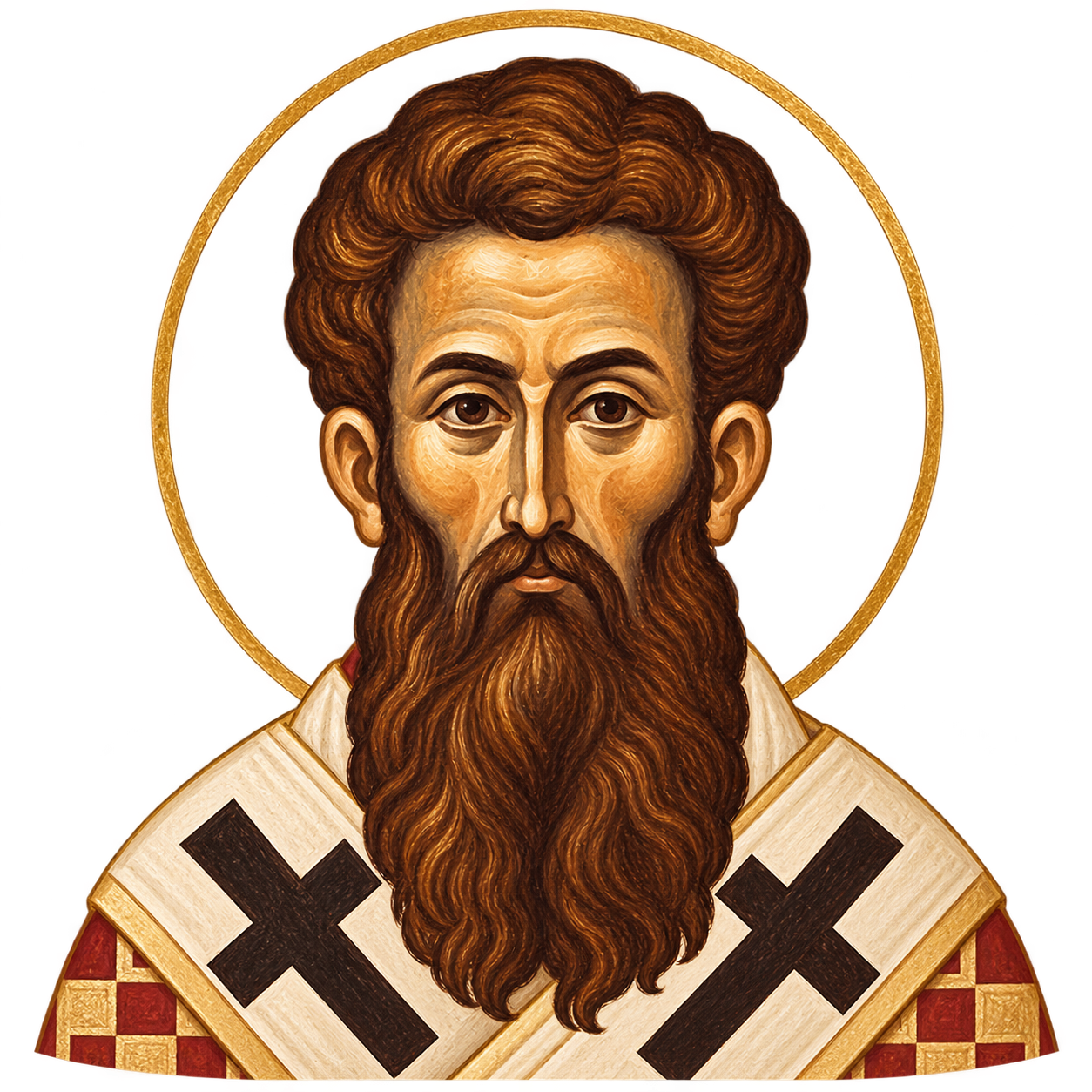
It was founded in the 14th century by the brothers Dorotheos and Markos Vlattis, who were connected with Saint Gregory Palamas. That historical link is especially significant for the subject of the event as well.
Patriarchal Foundation
Patristic research and academic study
The Patriarchal Foundation for Patristic Studies is a theological and scholarly institution of the Ecumenical Patriarchate and was founded in 1965.
Its work focuses on the study of the Church Fathers, the research and documentation of manuscripts, and the organization of academic initiatives, conferences, and publications.
History and heritage
From Byzantine Thessaloniki to the present
Vlatadon Monastery is at once a living monastery, a monument of late Byzantine architecture, and a centre of theological research. Its history illuminates the profound changes experienced by Thessaloniki from the fourteenth century to the modern era.
Thessaloniki in the 14th century
In the fourteenth century, Thessaloniki remained one of the Byzantine Empire's most important urban, commercial, and ecclesiastical centres. At the same time, it was tested by dynastic conflict, economic pressure, and social unrest. The Zealot movement controlled the city during much of the 1340s, within the wider civil war between the supporters of John V Palaiologos and John VI Kantakouzenos.
Political crisis coexisted with vigorous intellectual and artistic activity. Monasteries, scholars, and churchmen linked Thessaloniki with Constantinople and Mount Athos, while the city's churches testify to the achievement of Palaeologan art. This was also the setting of the Hesychast controversy, one of the most consequential theological debates of late Byzantium.
The foundation of Vlatadon Monastery
No surviving foundation document allows the monastery to be dated with complete precision. The safest formulation places its establishment in the middle of the fourteenth century, probably between 1351 and 1371. It was originally known as the Monastery of the Pantokrator and took its familiar name from the Vlattis family.
Ecclesiastical tradition and present-day institutional accounts recognise the brothers Dorotheos and Markos Vlattis as founders and members of the circle of Saint Gregory Palamas. A letter written by Patriarch Matthew around 1400, however, explicitly identifies Dorotheos as the man who established the monastery. Markos is strongly associated with its history, but his precise role in the foundation is documented less directly.
Dorotheos was active in the ecclesiastical life of Thessaloniki and later served as its metropolitan, conventionally dated to 1371–1379. Empress Anna Palaiologina of Savoy appears to have supported the monastery as a patron or benefactor. The extent of her contribution and the reported chrysobull of 1354 are known through later testimony and should therefore be described with appropriate caution.
Saint Gregory Palamas and Hesychasm
Gregory Palamas, an Athonite monk who became Metropolitan of Thessaloniki, was the principal theological spokesman for Hesychasm. Hesychasm was more than a method of silent prayer: it expressed a wider ascetic and theological tradition centred on the real participation of the human person in divine grace. The controversy surrounding it became closely entangled with the ecclesiastical and political life of the period.
Dorotheos and Markos are described as disciples, friends, or associates of Palamas, but this does not mean that Palamas personally founded or lived in the monastery. The connection is expressed most clearly in the decoration of the katholikon, where he appears twice in wall paintings dated after his canonisation in 1368. Vlatadon is therefore an early and important monument to Palamite memory, directly relevant to the event documented by this website.
The late Byzantine monastery
Within a few decades of its foundation, Vlatadon had gained a recognisable place in Thessaloniki's monastic landscape. Patriarch Matthew's letter of about 1400 refers to it as the Monastery of the Pantokrator, while the Russian pilgrim Ignatius of Smolensk included Vlatadon among the remarkable monasteries he encountered in the city early in the fifteenth century.
Later patriarchal documents refer retrospectively to earlier privileges, suggesting that the monastery was connected with the Ecumenical Patriarchate from an early stage. Its position close to the Acropolis walls, in the elevated northern part of the city, placed it in an area of marked monastic activity with commanding views over the urban landscape and the Thermaic Gulf.
The Ottoman period
Thessaloniki first passed under Ottoman rule in 1387, returned to Byzantine administration early in the fifteenth century, was ceded to Venice in 1423, and was conquered definitively by Murad II in 1430. The monastery survived these changes, although the katholikon preserves clear evidence of temporary use as a mosque: a shallow mihrab, non-figurative decoration, plastering, and deliberate scoring of the frescoes. The precise date and duration of this use have not been conclusively established.
During the Ottoman centuries the monastery was known as Tsaous Monastir and retained important privileges as a patriarchal stavropegion—that is, a monastery directly subject to the Ecumenical Patriarchate. Its property relationships nevertheless changed: in 1633 it was attached to the Athonite Monastery of Iviron, while in 1648 its previous status was restored.
The origin of the name Tsaous Monastir is uncertain. It has been associated variously with a monastery guard, an Ottoman garrison, or the nearby tower repaired by Tsaous Bey in 1431. A later story claiming that monks showed the Ottomans how to cut the city's water supply is not corroborated by a contemporary source and cannot be presented as historical fact.
From the 19th century to the modern city
The katholikon's present appearance is the product of several building phases. An extensive renovation in 1801 reshaped the northern and western parts of the ambulatory and introduced newer fabric. In 1907 the open southern arcade and western porch were built. These interventions now form part of the building's long history, even though they alter the appearance of its Byzantine phase.
After Thessaloniki became part of the Greek state in 1912, the monastery continued its religious presence within the growing city. The earthquake of 1978 caused serious damage and led to structural consolidation and archaeological investigation, revealing valuable evidence about the church's earlier phases. In 1988 the katholikon joined fourteen other monuments of Thessaloniki on UNESCO's World Heritage List.
Architecture and the katholikon
The katholikon belongs to an uncommon variation of the cross-in-square church, a type in which the central space and vaults form a cross within a roughly square plan. At Vlatadon the western arm of the cross is compressed, while the dome rests on two western piers and the sanctuary walls. This unusual solution is connected with the incorporation of an earlier Middle Byzantine building.
An ambulatory—a covered passage surrounding the main body of the church—encloses the Byzantine core. Chapels occupy its eastern side, with the southern chapel dedicated to the Apostle Paul. The northern chapel and much of the ambulatory chiefly belong to the alterations of 1801, while the exterior arcades of 1907 give the monument much of its present silhouette.
Three Byzantine cisterns also survive within the grounds and were connected with the system that carried water to Thessaloniki from Mount Chortiatis. Their presence shows that the monastic complex was not isolated from the workings of the city but stood beside infrastructure essential to urban life.
Wall paintings, treasures and manuscripts
The wall paintings belong to two principal phases. Fragments of the Ascension and Pentecost, together with detached sections now displayed in the Museum of Byzantine Culture, date to approximately 1310–1315. The main decoration of the dome, vaults, narthex, and southern chapel dates from after 1368 and is an important example of Palaeologan painting.
The monastery's sacristy preserves portable icons, manuscripts, and early printed books dating from the twelfth to the nineteenth century. These objects show that its intellectual life extended beyond worship to the use, copying, collection, and protection of books and ecclesiastical works of art.
The Patriarchal Foundation for Patristic Studies
The Patriarchal Foundation for Patristic Studies was established by a Patriarchal and Synodal act in 1965 and began operating at the monastery in 1968. Its founding mission embraces the study of Patrology, Christian literature, Patristic theology, and related theological disciplines under the oversight of the Ecumenical Patriarchate.
Its work with the manuscripts of Mount Athos is especially significant. Archives of microfilms and colour slides made precious material from Athonite libraries accessible to researchers, while catalogues and specialised studies contributed to palaeography, codicology, liturgics, and the history of Byzantine art. The Foundation also holds its own manuscript collection, including musical codices.
The Analekta Vlatadon publication series, scholarly conferences, and collaborations with universities and researchers have given the monastery an international academic presence. In 2020 an institutional agreement was signed for the conservation, restoration, and digitisation of a significant part of the Monastery and Foundation archives, including manuscripts, microfilms, and photographic material.
Vlatadon Monastery today
Vlatadon is the only Byzantine monastery in Thessaloniki that continues to function as a monastery today. It remains a place of worship of the Ecumenical Patriarchate while welcoming pilgrims, visitors, students, and researchers. This coexistence of living monastic practice, conservation, and scholarship is its defining modern characteristic.
Within the Paleochristian and Byzantine Monuments of Thessalonika, the katholikon represents the Palaeologan renaissance of late Byzantine art. Its panoramic position in Ano Poli still makes visible the relationship between monastery, walls, Acropolis, and the historic city descending towards the Thermaic Gulf.
Ten documented stories
10 Fascinating Facts About Vlatadon Monastery
Concise glimpses into the monastery's history reveal a monument far more complex than any single foundation date can suggest.
A foundation without one certain date
The monastery was probably established between 1351 and 1371. Exact years repeated in short guides are estimates, not dates recorded in a surviving foundation charter.
The evidence favours Dorotheos
Dorotheos and Markos Vlattis are honoured together as founders, but the earliest clear patriarchal reference names Dorotheos. Markos's participation is a strong ecclesiastical tradition supported less directly by the documents.
The church predates the monastery
The fourteenth-century katholikon incorporated parts of an earlier Middle Byzantine church. Wall-painting fragments dated to 1310–1315 demonstrate that the site already possessed a history of worship.
Two early images of Palamas
Saint Gregory Palamas appears twice in the katholikon. The paintings date from after 1368 and offer early monumental evidence of the honour accorded to him in Thessaloniki.
Three Byzantine cisterns
Three reservoirs survive at the monastery and were connected with the Chortiatis aqueduct. Their relationship with the city's water supply lies behind later—but unproven—stories concerning the conquest of 1430.
From Pantokrator to Transfiguration
The earliest written evidence calls it the Monastery of the Pantokrator. The katholikon is now dedicated to the Transfiguration of the Saviour, although the date at which this dedication became established remains uncertain.
Traces of Muslim worship
A mihrab, non-figurative decoration, and traces of plaster show that the katholikon served for a time as a mosque. The precise period of this conversion remains an open historical question.
The riddle of Tsaous Monastir
The monastery's Ottoman name is historically documented, but its origin is not. Explanations involving a guard, a garrison, or a neighbouring official remain hypotheses rather than facts.
Anna Palaiologina of Savoy and her contribution
Anna Palaiologina of Savoy probably supported the monastery during her time in Thessaloniki. Her contribution is attested through later testimony and is therefore presented with appropriate caution.
From katholikon to digital archive
The Byzantine church now stands beside an internationally important centre for patristic and manuscript research. Conservation and digitisation connect the monastery's inherited collections with the needs of modern scholarship.
Documentation
Sources and further reading
Selected institutional and scholarly sources used to cross-check the historical information presented on this page.